
Se encuentra usted aquí
Cristina Villamar
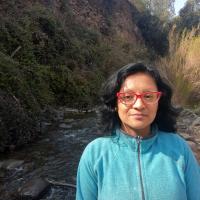
Cristina Villamar Ayala es Profesora Asociada del Departamento de Ingeniería en Obras Civiles de la Universidad de Santiago de Chile. Es Ingeniera Civil y Magíster en Ingeniería Ambiental de la Escuela Politécnica Nacional (Ecuador), y Doctora en Ciencias Ambientales con mención en Sistemas Acuáticos Continentales de la Universidad de Concepción (Chile).Su investigación se centra en la ingeniería sanitaria y las tecnologías del agua: tratamiento biológico de aguas residuales, valorización de residuos y aguas residuales, calidad del agua, digestión anaerobia y recuperación de recursos. Es investigadora responsable del Laboratorio de Investigación Interdisciplinaria en Ciencias y Tecnología del Agua Ko-Yaku.
- Costa-Conceicao, K., Villamar-Ayala, C. A., Ortiz-Calderón, C., Chamorro-Rodríguez, S. Ecotoxicological assessment of Zantedeschia aethiopica (L.) and Eisenia foetida Savigny exposure to pharmaceutical and personal care products, and hazelnut shell. Science of The Total Environment, 1030, 181745, 2026. https://doi.org/10.1016/j.scitotenv.2026.181745
- Madariaga-Segovia, P., Villamar-Ayala, C., Ramos-Delgado, N., Sánchez-Domínguez, M. Removal of Paracetamol, Amoxicillin and Triclosan from Synthetic Solutions and Wastewater Using Hazelnut Shell and Biochar: From Batch Adsorption to Fixed-Bed Application. Water, 18(19), 2448, 2026. https://doi.org/10.3390/w18192448
- Echeverría-Sáez, F. N., Carbonnel-Torralbo, A., Elliott-Oyarce, M. M., Villamar-Ayala, C. A.. Material Selection for Mycelium-Based Composites: A Systematic Review and Opportunities for Chilean Industrial Residues. Designs, 10(4), 86, 2026. https://doi.org/10.3390/designs10040086
- Gomes, D. A., Cusioli, L. F., Nishi, L., Mantovani, D., Paraíso, C. M., Almeida-Naranjo, C. E., Villamar-Ayala, C., Bergamasco, R. Microplastic Pollution in Aquatic and Terrestrial Ecosystems: Health Impacts and Remediation Strategies: A Systematic Review. Sustainability, 18(16), 8251, 2026. https://doi.org/10.3390/su18168251
- Plaza-Garrido, A., Villamar-Ayala, C. A., Ampuero, M., Gaggero, A. SARS-CoV-2, Noroviruses, Adenoviruses, and Antibiotic-Resistant Coliforms Within Chilean Rural Wastewater Treatment Plants. Water, 17(22), 3197, 2025. https://doi.org/10.3390/w17223197
- Madariaga-Segovia, P., Villamar-Ayala, C. A., Ramos, N., Sánchez-Domínguez, M., Lavín, R. Influence of pyrolysis conditions on the adsorbent properties of hazelnut shell biochar to remove paracetamol, amoxicillin, and triclosan. Case Studies in Chemical and Environmental Engineering, 12, 101251, 2025. https://doi.org/10.1016/j.cscee.2025.101251
- Almeida-Naranjo, C. E., Tejedor, J., Villamar-Ayala, C. A., Vizuete, G. Transforming waste into solutions: Raw and modified bioadsorbents for emerging contaminant removal. Journal of Environmental Chemical Engineering, 13(3), 116720, 2025. https://doi.org/10.1016/j.jece.2025.116720
- Gallegos-Castro, E., Almeida-Naranjo, C. E., Rivas, A., Figueroa, N., Montellano, L., Villamar-Ayala, C. A.. The Removal of Acidic Drugs from Domestic Wastewater Using an Innovative System of Constructed Wetlands/Stabilization Ponds in Series. Water, 17(8), 1192, 2025. https://doi.org/10.3390/w17081192
- Almeida-Naranjo, C. E., Santana-Romo, F., Gallegos-Castro, E., Villamar-Ayala, C. A., Debut, A. Triclosan removal from synthetic solution using corn cobs and their magnetic composites: Insights from batch adsorption and fixed-bed column studies. Industrial Crops and Products, 228, 120917, 2025. https://doi.org/10.1016/j.indcrop.2025.120917
- Manobanda-Lisintuña, M. F., Villamar-Ayala, C. A.. Carbon and water footprints within an environmental laboratory: Water, energy, and packaging management strategies. Green Analytical Chemistry, 13, 100243, 2025. https://doi.org/10.1016/j.greeac.2025.100243
- Conceicao, K. C., Freitas, L. S., Villamar-Ayala, C. A.. Behavior space-temporal of biofilters based on hazelnut shells/sawdust treating pharmaceutical and personal care products from domestic wastewater. Science of The Total Environment, 969, 178891, 2025. https://doi.org/10.1016/j.scitotenv.2025.178891
- Almeida-Naranjo, C. E., Villamar-Ayala, C., Daquilema, A., Debut, A. Valorization of corn cobs: a sustainable filtration approach for caffeine and triclosan removal. Applied Water Science, 15(9), 235, 2025. https://doi.org/10.1007/s13201-025-02577-0
- Almeida-Naranjo, C. E., Cuestas, J., Guerrero, V. H., Villamar-Ayala, C. A.. Efficient Decontamination: Caffeine/Triclosan Removal using Rice Husk in Batch and Fixed-Bed Columns. Water, 16(2), 197, 2024. https://doi.org/10.3390/w16020197
- Almeida-Naranjo, C. E., Frutos, M., Guerrero, V. H., Villamar-Ayala, C.. Characterization and Performance of Peanut Shells in Caffeine and Triclosan Removal in Batch and Fixed-Bed Column Tests. Molecules, 29(12), 2923, 2024. https://doi.org/10.3390/molecules29122923
- Conceicao, K. C., Villamar-Ayala, C. A., Plaza-Garrido, A., Toledo-Neira, C. Seasonal behavior of pharmaceuticals and personal care products within Chilean rural WWTPs under COVID-19 pandemic conditions. Journal of Environmental Chemical Engineering, 11(5), 110984, 2023. https://doi.org/10.1016/j.jece.2023.110984
- Madariaga-Segovia, P., Párraga, S., Villamar-Ayala, C. A.. Removal of triclosan, ibuprofen, amoxicillin and paracetamol using organic residues under a bibliometric-statistical analysis. Bioresource Technology Reports, 23, 101564, 2023. https://doi.org/10.1016/j.biteb.2023.101564
- Plaza-Garrido, A., Ampuero, M., Gaggero, A., Villamar-Ayala, C. A.. Norovirus, Hepatitis A and SARS-CoV-2 surveillance within Chilean rural wastewater treatment plants based on different biological treatment typologies. Science of The Total Environment, 863, 160685, 2023. https://doi.org/10.1016/j.scitotenv.2022.160685
- Costa-Conceicao, K., Villamar Ayala, C. A., Dávila, T., Gallardo, M. C. Performance of hybrid biofilter based on rice husks/sawdust treating grey wastewater. Water Science & Technology, 87(10), 2416-2431, 2023. https://doi.org/10.2166/wst.2023.132
- Tejedor, J., Álvarez-Briceño, R., Guerrero, V. H., Villamar-Ayala, C. A.. Removal of caffeine using agro-industrial residues in fixed-bed columns: Improving the adsorption capacity and efficiency by selecting adequate physical and operational parameters. Journal of Water Process Engineering, 53, 103778, 2023. https://doi.org/10.1016/j.jwpe.2023.103778
- Almeida-Naranjo, C. E., Guerrero, V. H., Villamar-Ayala, C. A.. Emerging Contaminants and Their Removal from Aqueous Media Using Conventional/Non-Conventional Adsorbents: A Glance at the Relationship between Materials, Processes, and Technologies. Water, 15(8), 1626, 2023. https://doi.org/10.3390/w15081626
- Yanez, S., Márquez, C., Valenzuela, B., Villamar-Ayala, C. A.. A Bibliometric-Statistical Review of Organic Residues as Cementitious Building Materials. Buildings, 12(5), 597, 2022. https://doi.org/10.3390/buildings12050597
- Plaza-Garrido, A., Limaico, M., Villamar-Ayala, C. A.. Influence of wastewater treatment technologies on virus removal under a bibliometric-statistical analysis. Journal of Water Process Engineering, 47, 102642, 2022. https://doi.org/10.1016/j.jwpe.2022.102642
- Villamar, C. A., Salazar, K., Montenegro-Rosero, K., Huaraca, L., da Conceicao, K. C. Preventive strategies for reuse and recycling of wastewater within the HDG production. Water Science and Technology, 85(1), 265-278, 2022. https://doi.org/10.2166/wst.2021.621
- Montenegro-Rosero, K., Villamar-Ayala, C. A., Fernández, L., Espinoza-Montero, P. Operational performance of corncobs/sawdust biofilters coupled to microbial fuel cells treating domestic wastewater. Science of The Total Environment, 809, 151115, 2022. https://doi.org/10.1016/j.scitotenv.2021.151115
- Almeida-Naranjo, C. E., Frutos, M., Tejedor, J., Cuestas, J., Valenzuela, F., Rivadeneira, M. I., Villamar, C. A., Guerrero, V. H. Caffeine adsorptive performance and compatibility characteristics (Eisenia foetida Savigny) of agro-industrial residues potentially suitable for vermifilter beds. Science of The Total Environment, 801, 149666, 2021. https://doi.org/10.1016/j.scitotenv.2021.149666
- Tejedor, J., Cóndor, V., Almeida-Naranjo, C., Guerrero, V., Villamar, C.. Performance of wood chips/peanut shells biofilters used to remove organic matter from domestic wastewater. Science of The Total Environment, 738, 139589, 2020. https://doi.org/10.1016/j.scitotenv.2020.139589
- Chicaiza, C., Huaraca, L., Almeida-Naranjo, C. E., Guerrero, V. H., Villamar, C. A.. Improvement of organic matter and nutrient removal from domestic wastewater by using intermittent hydraulic rates on earthworm–microorganism biofilters. Water Science and Technology, 82, 281-291, 2020. https://doi.org/10.2166/wst.2020.139
- Huaraca, L. F., Chamorro, S. A., Hernández, V., Bay-Schmith, E., Villamar, C. A.. Comparative acute toxicity of glyphosate-based herbicide (GBH) to Daphnia magna, Tisbe longicornis, and Emerita analoga. Journal of Environmental Science and Health, Part B, 55(7), 646-654, 2020. https://doi.org/10.1080/03601234.2020.1758497
- Almeida-Naranjo, C. E., Guachamín, G., Guerrero, V. H., Villamar, C. A.. Heliconia stricta Huber Behavior on Hybrid Constructed Wetlands Fed with Synthetic Domestic Wastewater. Water, 12(5), 1373, 2020. https://doi.org/10.3390/w12051373
- Villamar-Ayala, C. A., Carrera-Cevallos, J. V., Vasquez-Medrano, R., Espinoza-Montero, P. J. Fate, eco-toxicological characteristics, and treatment processes applied to water polluted with glyphosate: A critical review. Critical Reviews in Environmental Science and Technology, 49(16), 1476-1514, 2019. https://doi.org/10.1080/10643389.2019.1579627
- Guerrero, J. A., Almeida-Naranjo, C. E., Villamar Ayala, C. A.. Improvement of nutrients removal from domestic wastewater by activated-sludge encapsulation with polyvinyl alcohol (PVA). Journal of Environmental Science and Health, Part A, 54(8), 721-727, 2019. https://doi.org/10.1080/10934529.2019.1592526
- Villamar, C. A., Vera-Puerto, I., Rivera, D., De la Hoz, F. Reuse and Recycling of Livestock and Municipal Wastewater in Chilean Agriculture: A Preliminary Assessment. Water, 10(6), 817, 2018. https://doi.org/10.3390/w10060817
- Almeida-Naranjo, C. E., Espinoza-Montero, P. J., Muñoz-Rodríguez, M. I., Villamar-Ayala, C. A.. Hydraulic Retention Time Influence on Improving Flocculation in the Activated Sludge Processes Through Polyelectrolytes. Water, Air, & Soil Pollution, 228(7), 253, 2017. https://doi.org/10.1007/s11270-017-3427-0
- Villamar, C. A., Rivera, D., Aguayo, M. Anaerobic co-digestion plants for the revaluation of agricultural waste: Sustainable location sites from a GIS analysis. Waste Management & Research, 34(4), 316-326, 2016. https://doi.org/10.1177/0734242X16628979
- Villamar, C. A., Rivera, D., Neubauer, M. E., Vidal, G. Nitrogen and phosphorus distribution in a constructed wetland fed with treated swine slurry from an anaerobic lagoon. Journal of Environmental Science and Health, Part A, 50(1), 60-71, 2015. https://doi.org/10.1080/10934529.2015.964628
- Ortiz, G., Villamar, C. A., Vidal, G. Odor from anaerobic digestion of swine slurry: influence of pH, temperature and organic loading. Scientia Agricola, 71(6), 443-450, 2014. https://doi.org/10.1590/0103-9016-2013-0372
- Villamar, C. A., Silva, J., Bay-Schmith, E., Vidal, G. Toxicity identification evaluation of anaerobically treated swine slurry: A comparison between Daphnia magna and Raphanus sativus. Journal of Environmental Science and Health, Part B, 49(11), 880-888, 2014. https://doi.org/10.1080/03601234.2014.938560
- Villamar, C. A., Neubauer, M. E., Vidal, G. Distribution and Availability of Copper and Zinc in a Constructed Wetland Fed with Treated Swine Slurry from an Anaerobic Lagoon. Wetlands, 34(3), 583-591, 2014. https://doi.org/10.1007/s13157-014-0527-0
- Plaza de los Reyes, C., Villamar, C. A., Neubauer, M. E., Pozo, G., Vidal, G. Behavior of Typha angustifolia L. in a free water surface constructed wetlands for the treatment of swine wastewater. Journal of Environmental Science and Health, Part A, 48(10), 1216-1224, 2013. https://doi.org/10.1080/10934529.2013.776852
- Villamar, C. A., Rodríguez, D. C., López, D., Peñuela, G., Vidal, G. Effect of the generation and physical–chemical characterization of swine and dairy cattle slurries on treatment technologies. Waste Management & Research, 31(8), 820-828, 2013. https://doi.org/10.1177/0734242X13479431
- Neubauer, M., Plaza de los Reyes, C., Pozo, G., Villamar, C., Vidal, G. Growth and nutrient uptake by Schoenoplectus californicus (C.A. Méyer) Sójak in a constructed wetland fed with swine slurry. Journal of Soil Science and Plant Nutrition, 12(3), 421-430, 2012. https://doi.org/10.4067/S0718-95162012005000004
- Villamar, C. A., Cañuta, T., Belmonte, M., Vidal, G. Characterization of Swine Wastewater by Toxicity Identification Evaluation Methodology (TIE). Water, Air, & Soil Pollution, 223(1), 363-369, 2012. https://doi.org/10.1007/s11270-011-0864-z
- Pozo, G., Villamar, C. A., Martínez, M., Vidal, G. Effect of organic load and nutrient ratio on the operation stability of the moving bed bioreactor for kraft mill wastewater treatment and the incidence of polyhydroxyalkanoate biosynthesis. Water Science and Technology, 66(2), 370-376, 2012. https://doi.org/10.2166/wst.2012.204
- Pozo, G., Villamar, C. A., Martínez, M., Vidal, G. Polyhydroxyalkanoates (PHA) biosynthesis from kraft mill wastewaters: biomass origin and C:N relationship influence. Water Science and Technology, 63(3), 449-455, 2011. https://doi.org/10.2166/wst.2011.242
- Villamar, C. A., Jarpa, M., Decap, J., Vidal, G. Aerobic moving bed bioreactor performance: a comparative study of removal efficiencies of kraft mill effluents from Pinus radiata and Eucalyptus globulus as raw material. Water Science and Technology, 59(3), 507-514, 2009. https://doi.org/10.2166/wst.2009.002
2026-2030 ANID – FONDECYT Regular 1260727, "Study of phage-based biocontrol of antibiotic-resistant bacterial pathogens from wastewater treating nature-based solutions". Investigadora responsable.
2023-2025 ANID – FONDEF IDeA ID23I10184, "Propuesta tecnológica de paisajes depuradores para la recuperación de aguas residuales en espacios rurales y urbanos, con generación de subproductos con valor agregado". Directora.
2022-2025 ANID – FONDECYT Postdoctorado 3220570, "Environmental persistence and impact of antibiotics and antibiotic-resistant microorganisms from rural domestic wastewater in Chile". Patrocinante (investigadora responsable: Dra. Angela Plaza-Garrido).
2022-2023 VIME 167-2022, "Fortalecimiento de competencias técnicas en operarios de plantas de tratamiento de residuos líquidos rurales ubicadas en las regiones de O'Higgins, Valparaíso y Metropolitana". Directora.
2021-2022 Transfiere DGT-TR-2007, "Desarrollo de tecnología de biofiltración para el tratamiento de aguas residuales y la generación de subproductos con valor agregado". Directora.
2020-2021 DICYT Postdoc 092118VA, "Estudio de la permanencia, interacción y tratamiento de contaminantes emergentes y microorganismos patógenos procedentes de aguas residuales domésticas". Investigadora responsable.
2019-2022 ANID – FONDECYT Iniciación 11190352, "Incidence of Biofiltration processes on the Removal of Pharmaceutical and Personal Care Products from Domestic Wastewater". Investigadora responsable.
2019 DICYT 091918VA, "Evaluación estacional del potencial de revalorización de subproductos procedentes de biofiltros híbridos alimentados con aguas residuales domésticas". Directora.
2019 PIS-18-01 (internacional, Escuela Politécnica Nacional, Ecuador), "Estudio de la remoción de contaminantes emergentes usando residuos agroindustriales dentro de procesos de filtración como alternativa de saneamiento". Investigadora colaboradora.
2016-2017 CIMNE-INER-EPMRQ (internacional, Escuela Politécnica Nacional, Ecuador), "Biogas from Slaughterhouse Waste Water treatment for Heating Purpose". Investigadora colaboradora.